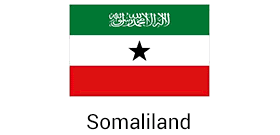
 Horn of Africa Airspace Rift Forces New Rerouting Strategies
The decision by Somaliland to halt any passenger movements routed through Mogadishu has become one of the most consequential developments in the region’s aviation landscape this year. Announced for enforcement from 1 December, the directive blocks all airlines serving Hargeisa from using Mogadishu as a transit point, amplifying a long‑simmering conflict over airspace control, regulatory authority and competing visa policies.
For aviation stakeholders across sub‑Saharan Africa, the timing and scale of the move are particularly significant. The Horn of Africa represents a vital artery linking East Africa with the Gulf and beyond, yet it is also one of the continent’s most sensitive operational corridors. Shifts in political alignment or airspace management can quickly influence the routing choices of carriers, alter supply chain behaviours and affect overall market confidence in the region’s reliability.
At the heart of Hargeisa’s decision lies growing frustration over perceived interference from Somali federal authorities. Somaliland officials argue that airlines operating into their territory face unpredictable directives when transiting the skies governed by Mogadishu. Reports of aircraft being turned back mid‑route have further heightened concerns, prompting Somaliland to frame the new measure as a safeguard for flight safety and procedural consistency rather than a political escalation.
The dispute, however, stretches well beyond aviation logistics. Tensions have intensified following Somalia’s rollout of a mandatory e‑visa system for all inbound passengers, including those destined solely for Somaliland. For Hargeisa, this requirement is seen as an attempt to reassert authority over borders it considers fully autonomous. In response, Somaliland has reinforced its own pre‑arrival approval rules for carriers, leaving airlines to navigate two sets of regulations over a single geographic area.
These developments are unfolding against a political backdrop that continues to gain complexity. Somaliland, which has administered itself independently for more than three decades, has recently reiterated its intent to exercise full control over its airports, ports and territorial skies. Senior officials have underlined that any civil or commercial aircraft crossing its airspace must obtain clearance directly from Hargeisa, positioning this latest decision as part of a broader effort to consolidate authority over the region’s aviation ecosystem.
The resulting uncertainty places airlines, especially those with strong regional links, in a challenging position. Ethiopian Airlines, by far the largest operator into Hargeisa and a crucial connector for the Horn, must now re‑evaluate routings that avoid Mogadishu altogether. While alternative paths are geographically available, the political sensitivities surrounding overflight rights increase the likelihood of irregularities in scheduling, fuel planning or in‑flight decision‑making. In a region where predictability is an essential asset, even small disruptions can reshape network strategies.
These shifts carry particular weight for Africa’s tourism and development sectors. The airport in Hargeisa functions as a pivotal entry point for international staff, diaspora travellers and emergency operations. Any tightening of airspace procedures or unexpected rerouting can complicate mission planning for humanitarian organisations, limit flexibility for business‑sector movement and challenge operators designing itineraries for diaspora communities returning to the region. Such constraints can also influence how travellers perceive the reliability of northern Somalia’s aviation infrastructure.
The dispute serves as a clear reminder of how political disagreements can spill into aviation operations, influencing everything from cargo flow to airport revenue projections. In markets across sub‑Saharan Africa where connectivity remains comparatively thin, each additional layer of administrative complexity can reduce traffic volumes, raise operating costs or push carriers to shift resources toward less volatile destinations. A single contentious air corridor can create ripple effects across multiple hubs, especially those in neighbouring Kenya and Ethiopia.
At the centre of the standoff is the question of sovereign authority. Somalia’s emphasis on nationwide e‑visa compliance highlights its efforts to unify border management, while Somaliland’s position reflects a long‑standing insistence on governing its own entry system. Warnings from Hargeisa that unauthorised overflight may trigger enforcement actions underline just how sensitive the situation has become. The dynamic has forced airlines to reassess internal compliance and risk‑management procedures, with many adjusting advisory notes and operational guidelines to align with rapidly shifting requirements.
For operators serving humanitarian, government or business traffic into Somaliland, contingency planning has now become essential. Crew briefings, insurance reviews, alternate routing maps and new passenger documentation checks are likely to become standard elements of flight preparation. Travellers transferring through East African hubs may encounter unexpected itinerary changes or added verification steps as airlines adapt to the new regulatory environment.
Across the wider continent, the episode highlights the importance of coordinated aviation governance. Many African markets continue to wrestle with fragmented oversight structures, and the Horn represents one of the regions where political tension most frequently intersects with practical airspace management. Evolving rules around overflight permissions, air navigation charges and border documentation illustrate how operational stability can be disrupted when national priorities diverge sharply.
Despite the escalating rhetoric, industry observers note that both sides ultimately have reasons to reduce tensions. Somaliland relies heavily on international air access to support economic activity and maintain links with its global diaspora, while Somalia benefits from managing a unified national airspace system that generates significant operational revenue. Finding a path toward stability will be essential, but the immediate outlook remains unpredictable.
As 1 December approaches, the full effects of Somaliland’s decision will become more visible. Airlines are preparing for operational changes, and the continent’s aviation community is watching closely to understand how this shift will influence broader connectivity trends in the Horn. What is certain for now is that the region’s already delicate aviation map has entered a new phase—one that will require adaptability, cautious planning and close monitoring from all involved.
